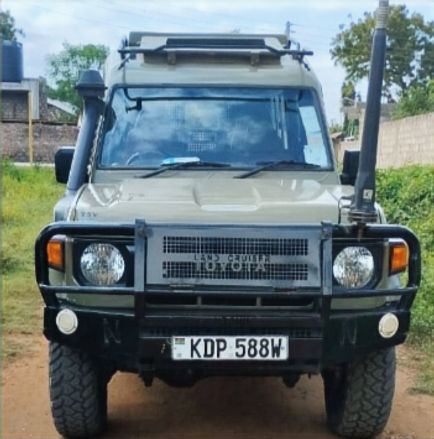
Welcome to Tabia Tours and Safaris - Your Gateway to Unforgettable Adventures!
Embark on a journey of a lifetime with Tabia Tours and Safaris, where your dream safari and tour experiences come to life. Nestled in the heart of Watamu, we specialize in crafting personalized adventures that immerse you in the breathtaking beauty and rich cultures of our diverse landscapes.
Explore the Wild:
From the majestic wildlife of Tsavo National Parks, Nairobi National Parks - all Kenyan National Parks and Game Reserves to the stunning landscapes of Mount Kenya, Hell’s Kitchen, we offer a range of safaris that bring you face-to-face with nature's wonders. Our expert guides, with their extensive knowledge and passion for the wild, will lead you on an extraordinary exploration of the great outdoors.
Cultural Encounters:
Travel isn't just about the sights; it's about the stories you'll share. Our tours provide you with authentic interactions with local communities, allowing you to experience their customs, traditions, and way of life. Whether it's sharing a meal, joining in a local celebration, or learning a traditional craft, immerse yourself in the vibrant cultures of the region.
Tailored to You:
At Tabia Tours and Safaris, we understand that every traveler is unique. That's why we offer customizable itineraries to match your interests, whether you crave adventure, relaxation, or a bit of both. Let us help you design the perfect getaway, filled with activities that excite and inspire you.
Experience Luxury and Comfort:
We pride ourselves on providing an exceptional level of service, ensuring that your journey is both comfortable and enjoyable. From handpicked accommodations to gourmet dining, we take care of every detail, allowing you to focus on creating unforgettable memories.
Safety First:
Your safety is our top priority. We adhere to the highest safety standards and guidelines, ensuring that you can explore with peace of mind. Our team is dedicated to providing a secure and enjoyable experience for all our guests.
Join Us:
Are you ready to embark on an extraordinary adventure? Browse our selection of tours and safaris, or get in touch with our friendly team to start planning your perfect trip today. Discover the magic of the wild with Us - where every journey is an adventure waiting to be experienced.
Get Inspired. Get Adventurous. Get Going!


Parks and Reserves
Information about some of the Parks and Reserves that we arrange safaris to.
LAKE NAKURU NATIONAL PARK

The park lies 140km north-west of Nairobi. The ecosystem comprises of the lake, surrounded by mainly wooded and bushy grasslands. The park supports a wide ecological diversity with flamingos [greater and lesser] and other water birds being the major attractions of the area. The ecosystem provides for about 56 different species of mammals including the white rhino and buffalos and a variety of terrestrial birds numbering nearly 450 species.
MT. KENYA NATIONAL PARK

Climbing Mt. Kenya is for those who are adventurous and strong enough to take the 5,199m to its peaks. Mt. Kenya is the highest mountain in Kenya and the second highest in Africa after Mt. Kilimanjaro in Tanzania. The best months for climbing are January, February, August and September, for those who wish to savor the mountain air, the glorious views, the peace and tranquility that emanate from the mountain. Mt. Kenya is a world heritage site.Look out for unique montane and alpine vegetation with 11 species of endemic plants, tarns, glaciers. Wildlife to see:- tree hyrax, white tailed mongoose, suni, black fronted duiker, giant forest hog, mole rat, bush bucks, water bucks and elands.
AMBOSELI

Is Kenya’s most popular and most sought after photographer’s paradise. There is literally nowhere else on earth offering such a variety of wildlife attracting against the background of the Kilimanjaro mountain. The major attractions are herds of elephants, Mt. Kilimanjaro, big five, observation hill which allows an aerial view of the whole park especially the swamps and elephants, swamp below observation hill hosts many elephants, buffalos, hippos and a variety of waterfalls like pelican and Egyptian goose, contemporary maasai culture and indigenous life style.
MAASAI MARA

The Maasai Mara is one of the best known and most popular reserve in the whole of Africa. It lies in the Great Rift Valley. Here the valley is wide and a towering escarpment can be seen in the hazy distance. Most of the game viewing activities occur on the valley floor. The animals are also at liberty to move outside the park into huge areas known as “dispersal areas”. There can be as much wildlife roaming outside the park as inside. Many Maasai villages are located in the “dispersal areas” and have over centuries, developed a synergetic relationship with the wildlife.
Attractions are hot air ballooning, huge savannahs of golden grasslands, big skies, rift valley escarpment, lion sightings, and wildebeest migration which is a huge tourist attraction that brings droves of tourists to the mara in the rainy seasons. Every July or sometimes August, the animals travel over 960km from Tanzania’s Serengeti plains, northwards to the maasai mara and the mara river is the final obstacle. In October or November, once gone, they turn around and go back to the Serengeti plains.
The animals involved in the great migration are:- wildebeests, Thomson gazelles, zebras, topi and elands. The herds are ruthlessly preyed upon by prides of lions that track them across the wilderness and crocodiles that lie in wait as the animals across the mara river.
TAITA HILLS

The Taita Hills cover an area of 1000kmsq and they form the northern most part of the Eastern Arc Mountains. Taita hills rise to a maximum elevation of 2208m above sea level at Wuria peak. Most of the hill is covered by the Taita Hills forest. The taita hills forest hold a unique biodiversity with 13 types of animals found only in the taita hills and nowhere else in the world. In addition, 22 plant species found in the Taita Hills forests are typical of the eastern Arc forests.
SHIMBA HILLS NATIONAL RESERVE

The national reserve lies approximately 33km. The Coastal ecosystem comprises of a heterogeneous habitat including forestlands, exotic plantations, scrublands and grasslands. The ecosystem holds one of the largest coastal forests in East Africa after Arabuko-Sokoke Forest.
The reserve is rich in flora, fauna and hosts the highest density of African elephant in Kenya.
Other animal species found in the area are sable antelopes, black and rufous elephant shrew, bushy tailed mongoose and other small mammals like fruit bat.
The forest is an important bird area and is endowed with forest birdlife while the grasslands hold localized species such as red-necked-spur fowl, croaking cisticola and Zanzibar red bishop.